

David and Goliath Grants
(405) 486-9104 Start — it’s free to look
Photorealistic cinematic photograph of David and Goliath facing off in a valley at sunrise: David, a young Black Israelite shepherd with dark brown skin and dark curled hair, small in frame with a sling in his hand and five smooth stones at his feet, standing before the towering armored giant Goliath, silhouetted against the rising sun with spear and shield

“You put in for it — we do the work behind it.”

David and Goliath Grants matches your house of worship with grants it can actually get — readiness, matching, writing, filing, and tracking — for one flat fee. Never a percentage. Never a promise we can’t keep. Churches, synagogues, mosques, Hebrew Israelite congregations, Jehovah’s Witness Kingdom Halls, temples, and other faith communities in every state welcome.

Question 1: How does it work?

  1. 1

    Tap your needs on the Collection Plate. Building, food, youth, security, outreach, leader renewal — the plate fills with the grants your congregation could be getting.

  2. 2

    Complete the sign-up form. Tap “Start your sign-up” below to open our Google Form. Two minutes. Congregation or house of worship name, where you are, what you need, how to reach you. Nothing sensitive — ever.

  3. 3

    We run your readiness check. 501(c)(3) or covering letter from your denomination, association, or parent organization, SAM.gov/UEI if a federal grant is in play, the documents funders ask for. If something’s missing, we tell you plainly and help you fix it.

  4. 4

    You get your plate in writing. The matched grants, the deadlines, and one flat fee quoted in full before any work starts — with the Filed, or It’s Free promise in writing. No payment is due before this step.

  5. 5

    We do the work behind the scenes. We write it, file it on time, track it after, and line up the next round.

See how it works, step by step ↓

Question 2: How do I sign up?

Door 1

The sign-up form — on Google Forms Two minutes, no payment, nothing sensitive. Go to sign-up ↓

Door 2

Call or text A named person, not a call center. (405) 486-9104

Door 3

Email — alternate option Not the sign-up form — for the member or admin who’d rather write it out instead of using the form. countrycousinsinternational@gmail.com

After you reach out A named contact from David and Goliath replies within one business day. We run the readiness checklist together. You see your plate and your flat fee in writing before you pay anything. No payment is taken on this page, and nobody chases you if you decide it’s not time.
Filed, or It’s Free· Never a percentage of the award· Never a guarantee — the funder decides· One flat fee, quoted in writing first

Not just churches — every house of worship

When we say “ministries,” we mean the whole table. If your community gathers to worship, serves its neighbors, and has its nonprofit paperwork in order — or needs help getting it in order — the same start-to-finish process applies to you.

Christian churches

All denominations and independent churches — Baptist, Methodist, Pentecostal, Catholic, Episcopal, non-denominational, and every tradition in between.

Jewish synagogues & temples

Synagogues, temples, and Jewish community ministries — for building, security, food, youth, and community-service grants open to Jewish congregations.

Muslim mosques & Islamic centers

Masjids, mosques, and Islamic centers — for security, food ministry, youth programs, building needs, and outreach that serves the wider community.

Hebrew Israelite congregations

Hebrew Israelite congregations and assemblies — same readiness check, same matching, same filing and tracking, in your congregation’s own name.

Jehovah’s Witnesses — Kingdom Halls

Kingdom Halls and Jehovah’s Witness congregations — for the lanes a Kingdom Hall can qualify for, especially building, safety, and security.

Other faith communities

Temples, meeting houses, and other houses of worship and faith-based nonprofits. If you’re not listed here, ask — we’ll tell you plainly whether we can help.

Plain talk on eligibility: most community-service, food, historic-building, and security lanes — including the federal Nonprofit Security Grant Program — are open to houses of worship across faiths. A few lanes are tradition-specific by the funder’s own rules (a denomination’s fund is for its own congregations; the Kingdom Advancing Grant is Christian-only). In your readiness check we sort which lanes fit your tradition and say so honestly before any fee is quoted — you never pay to chase a grant your community can’t get.

The Collection Plate — the grants you could be getting

Everybody who grew up around a house of worship knows the offering plate. This is how we show a congregation what’s out there: tap what your community needs, and watch the plate fill with the grants you could be getting. Every grant that lands on the plate is a real lane from the ranked board below, at its real award range. Keep your plate in mind when you complete the sign-up form — you’ll pick the same needs there.

Photograph of a polished brass church offering plate with a burgundy felt center, seen from above on a dark wood table in warm church light
The plate is empty — tap a need above and watch it fill.

Read the plate honestly: the plate shows grants your ministry could apply for, based on the needs you picked — the grants you could be getting, not money in hand. Eligibility is confirmed in the readiness step, funders decide every award, and nothing on this plate is promised money. The total is the size of the opportunity if every lane paid at once — real life doesn’t work that way, and most ministries win one lane at a time.

How it works — start to finish

Most houses of worship aren’t missing faith. They’re missing paperwork, registrations, and somebody with time to chase deadlines. Here is exactly who does what at every step: your part stays small, and the rest is on us.

1

Tap your needs on the Collection Plate

Your partTap what your community needs — building, food, youth, security, outreach, leader renewal — and see the plate fill with real grant lanes and real award ranges.

Our partEvery lane on the plate is researched and sourced before it ever appears here. No invented programs, no stale lists sold as fresh.

2

Complete the sign-up form

Your partTap “Start your sign-up” in the sign-up section to open our Google Form — two minutes: congregation name, city and state, what you need, how to reach you. Your sign-up is complete once you submit that Google Form. Or skip the form — call or text (405) 486-9104.

Our partA named contact replies within one business day — not an auto-responder and not a call center. And we never ask for anything on the Never List printed beside the form: no EIN, no SSNs, no bank logins, no SAM.gov password, no payment.

3

We run your readiness check

Your partHand over the documents your congregation already has — determination letter or covering letter from your denomination, association, or parent organization, recent financials, board or leadership list — when we ask, through a secure link we send after we talk. Never through the public form.

Our partWe check your grant position end to end: 501(c)(3) determination letter or group-ruling / parent-organization covering, EIN on file, SAM.gov registration and UEI if a federal grant is in play, financials and documents assembled into one reusable file. Half the houses of worship out there can’t even apply until this part is fixed — if something’s missing, we tell you plainly and help you fix it.

4

You get your plate in writing

Your partRead it and decide. If it’s not time, it’s not time — nobody chases you.

Our partYour matched grants ranked by fit and deadline, the work plan, and one flat fee quoted in full — with the Filed, or It’s Free promise in writing. No payment is due before this step, and no agreement is signed before you’ve seen it.

5

We do the work behind the scenes

Your partReview and approve the application before it goes anywhere, and sign where your congregation signs. Your house of worship is always the applicant — its name, its EIN, and any money lands in its own account.

Our partWe write the application, file it complete and on time through the funder’s own portal, track it to the decision, share the decision letter either way, and line up the next round before the current one closes. Grant work is a calendar, and we keep it.

Proof, not promises: you get proof of filing for every application — the portal confirmation, the date, and the deadline it beat. If we ever tell you something was filed, you can hold the receipt.

What the other companies don’t do — we do

We studied the field before we built this: the faith-community grant services, the general grant writers, and the do-it-yourself databases. These are the gaps they leave — verified from their own published terms and their customers’ own reviews — and what David and Goliath Grants does instead.

1

We submit it for you

The gapSome services stop at writing. One church-only service’s own terms say it plainly: “We write. You submit.” The church gets handed a document — and the hardest, most technical part is still on the church.

What we doStart to finish includes the filing. We prepare the application and submit it — in the church’s own name and EIN, through the funder’s own portal — and confirm it went in, with the receipt to prove it. The church never gets left holding a document and a deadline. Software platforms hand you a dashboard; we hand you a filed application.

2

We start at readiness

The gapMost services start at matching or writing — which assumes the congregation can already apply. Half the houses of worship out there can’t: no determination letter on file, no SAM.gov registration, no UEI, documents scattered.

What we doStep one is readiness, before any matching. 501(c)(3) determination letter or group-ruling / parent-organization covering, SAM.gov registration and UEI, financials and documents assembled into one reusable file. We fix the step congregations are stuck on — then we match.

3

One flat fee. No required subscription, no setup fee, no lock-in

The gapThis field runs on recurring charges: monthly subscriptions of $195–$749, setup fees as high as $2,500, and contracts that lock a church in for six months or a year — paid whether or not a single application ever gets filed.

What we doOne flat fee for the work, quoted in full before any work starts. No required subscription. No setup fee. No lock-in contract. You know the whole cost up front, and the fee is for the work — never a percentage of an award, and never tied to a promise of one. The one monthly option we offer, Grant Watch at $99/month, is an optional add-on only — never required to hire us, and you can cancel anytime.

4

People, not a database

The gapDatabase services sell you access to listings — some of them stale — and leave the searching, the checking, and the deadline-watching to you. Nobody there knows your church’s name.

What we doA named person works your file. We do the searching and the eligibility checking, we watch your deadlines, and we keep tracking your application after it’s submitted — through the decision, and into the next round.

5

Faith communities only — every tradition, every state

The gapGeneralist firms serve everybody: houses of worship are one vertical among several — next to schools, fire departments, and city governments — handled with the same playbook as any other client. And most faith-focused services serve one tradition, or one state, and stop there.

What we doWe serve faith communities only, across traditions, nationwide. Churches, synagogues, mosques, Hebrew Israelite congregations, Kingdom Halls, temples, and other houses of worship are the whole practice — the funders, the application routes (like security money running through your state’s administering agency, not FEMA directly), and the tradition-specific lanes each community actually qualifies for, in whatever state you stand in.

6

The whole congregation gets in

The gapEvery service in this field talks to the pastor, rabbi, imam, or board — and stops there. The member who spots a grant at work has no way in.

What we doAny member can bring a grant opportunity for their house of worship — for the building, for outreach, for the pantry — and we check it and run it start to finish. The people who see the need first get a door to walk through. (How that works is spelled out in the members section below.)

We guarantee the work. Nobody honest can guarantee the grant.

No one can promise a house of worship a grant — the funder decides, and David and Goliath doesn’t sit in the funder’s chair. What we control is the work: the readiness, the writing, the filing, the tracking. So that’s what our guarantee covers, in writing.

Filed, or it’s free

If we take a congregation’s application fee and do not file that application — complete and on time — the congregation gets every dollar of that fee back. The filing is ours to deliver, so we stand on it.

The readiness promise

If we complete a congregation’s readiness package and cannot find grants that community actually qualifies for, the readiness fee is refunded. You don’t pay for a file that goes nowhere.

No-win honesty

If a funder says no, you see the decision letter, you hear plainly why, and we line up the next round. The fee bought real work — delivered, and shown to you, not just claimed.

Why we will never say “guaranteed grant — or your money back”

That phrase, applied to grant money, is a warning sign, not a selling point. Federal grant-scam guidance from the U.S. Department of Health & Human Services and the Federal Trade Commission lists promises of guaranteed funding among the tells of a grant scam — because no honest service can promise another organization’s decision. Any company that guarantees you an award is selling you a line. David and Goliath guarantees the work, shows the work, and refunds the fee when the work isn’t delivered. The award itself is the funder’s call, and we’ll always say so plainly.

The anti-ghosting promise

The number one complaint in this field is congregations that paid upfront and were ghosted. This promise exists so that can never be your story here.

You will always know where your application stands

The pattern in this field is money gone, calls unreturned, nothing filed — and in the worst cases outright fraud. Every David and Goliath client gets the opposite, in writing, from day one:

  • A written start-to-finish checklist — every step of your engagement, in writing, from day one.
  • A named contact — a real person you can reach at (405) 486-9104, not a ticket queue.
  • A reply within one business day when you reach out — and status updates at every step: readiness, matching, writing, submission, decision. You hear from us at each one.
  • Proof of filing — portal confirmation, date, and deadline for every application we submit for you.
  • Plain speech, always — if we haven’t filed yet, we say so plainly, and we say why and when we will. No silence, no runaround.

How we charge — for the work, never for the blessing

Houses of worship pay for the work: finding the grants, checking eligibility, writing and submitting the application, tracking it to the decision. The core work is one flat fee, quoted in full before any work starts — no required subscription, no setup fee, no lock-in, never a percentage. Below that is one optional add-on, Grant Watch at $99/month, for congregations that want us watching for new grants year-round. It is never required, and applications always stay flat fee.

Readiness Package

A one-time flat fee to get a house of worship grant-ready: 501(c)(3) status checked, SAM.gov and UEI registration shepherded in the congregation’s own account, determination-letter or group-ruling / covering documentation pulled, financials and documents assembled into one reusable file. Half the houses of worship out there can’t apply until this is fixed — it stands on its own, and every later application reuses it. And if we finish it and can’t find grants your community qualifies for, the fee comes back.

Flat Fee per Application

One flat fee per grant application: matching, eligibility check, writing, submission, and tracking, handled start to finish. You know the full cost before we start, and the fee is the same whether the answer is yes or no — because it’s payment for the work, not a cut of the outcome. And if we take the fee and don’t file, it’s free — every dollar back.

Optional add-on

Grant Watch

$99 / month

For congregations that want us watching year-round: we keep scanning for new grants your community qualifies for and alert you when a cycle opens or a deadline is coming — local grants in the fall, denominational / association and capital funds in January, security money when your state’s window opens. Optional, cancel anytime, never required. Applications are still quoted and paid as separate flat fees — Grant Watch never turns into a percentage or a lock-in.

Grant Watch — $99/month, only if you want it

What it is: an ongoing watch, not a replacement for an application. You add it after — or alongside — a readiness package or an application, and we keep your house of worship on our radar so the next grant doesn’t pass you by.

What it is not: it is never required to hire us. Every readiness package and every application stays available on its own flat fee, with no Grant Watch attached. There is no setup fee and no lock-in — cancel anytime and you owe nothing beyond the month you’re in.

Want it? Say so on the sign-up form or call (405) 486-9104 and we’ll add it in writing, with the $99/month price and the cancel-anytime term on the same page as your flat-fee quote.

  1. 1

    Ongoing scanning — we keep checking foundation, corporate, denominational, and government lanes against your congregation’s profile, needs, and tradition.

  2. 2

    New-grant alerts — when a grant you qualify for opens, you hear it from us first, with the amount, the deadline, and whether it’s worth your fee.

  3. 3

    Deadline watching — the cycles that sneak up — Kingdom Advancing and Sacred Places in January, Lilly clergy renewal in March, security windows through your state — tracked so no date gets missed because nobody was watching.

  4. 4

    Readiness kept current — we flag when a document, registration, or renewal needs attention before the next application, so your file never goes stale.

Never a percentage of the award

If a congregation wins $50,000, we don’t take $5,000 of it. Most funders prohibit paying a writer out of grant money on a percentage, federal grants restrict contingency fees for landing awards, and the grant profession’s own ethics code forbids it. Your community keeps 100% of whatever it is awarded.

Never a guarantee

We sell the work, never the outcome. “We guarantee you’ll get a grant” is literally the pitch fake grant companies use on houses of worship. We will tell you honestly when a lane is a long shot — and when one isn’t worth your fee at all.

Always in your own name

Every application goes in under your house of worship’s own name and EIN, and your congregation delivers the program. That’s not our rule — it’s the funders’. Our job is the readiness, the matching, the paperwork, and the calendar.

You don’t have to be the leader to spot the stone

This service isn’t just for pastors, rabbis, imams, elders, and boards. Any member of the congregation can find a grant opportunity for their own house of worship — a grant for the building, for outreach, for the food pantry — and bring it to David and Goliath Grants. You bring the opportunity. We check whether your community is eligible and run the application start to finish.

Building projects

A roof, a security system, a historic building that needs its walls and windows saved — if there’s a fund for it, bring it to us.

Outreach expansion

A recovery ministry, a new community program, a bigger reach into the neighborhood — outreach money exists for houses of worship that serve non-members.

Food & youth programs

Pantries, meal programs, after-school and youth work — the lanes where houses of worship win most often, and where members see the need first.

Whatever you find

The vision is limitless: if a ministry qualifies for it, we will chase it. A link, a flyer, a name you heard — that’s enough to start.

1

Spot itSee a grant — online, at work, from another congregation — that could fit your house of worship’s building or outreach.

2

Bring it to usTap the Collection Plate, send the form, or call (405) 486-9104. No paperwork needed from you — that’s our job.

3

We check eligibilityWe verify it’s real, confirm your congregation qualifies, and say so honestly if it doesn’t.

4

We run it start to finishReadiness, application, submission, tracking — handled, in your congregation’s own name.

The rules don’t change because a member brought the grant: flat fee for the work, never a percentage of any award, never a guarantee — and every application goes in your house of worship’s own name and EIN, because funders require the applicant to be the congregation delivering the service. Your community keeps 100% of whatever it is awarded.

Deadline on the board

Walmart Spark Good Local Grants ($250–$5,000) — houses of worship and faith-based organizations are expressly eligible for community projects like food pantries and clothing closets. The current cycle’s safe submit date is November 30, 2026.

See the grant board ↓

The grant board — ranked lanes for a small-to-mid-size house of worship

Ranked by how realistic each lane is over the next six months (December 2026 – May 2027), from research completed November 24, 2026. These lanes run nationwide — national funders, federal programs, and the local lanes (community foundations, food banks, denominational and association funds) that exist in every state, shown here with the researched examples nearest our Oklahoma City home base. Some lanes below are open across faiths; a few are Christian- or denomination-specific and are labeled that way on the card. Eligibility for your congregation is confirmed in the readiness step before any fee is quoted — and every amount and date below carries its source, because cycles move.

Lane 1 · Fastest first win

Walmart Spark Good Local Grants

Walmart / Sam’s Club / Distribution Centers
$250 – $5,000
Per facility, per year, for community-benefit projects
Open now — submit by Nov 30, 2026
What it funds
Community-benefit projects — expressly food pantries, soup kitchens, and clothing closets.
Who’s eligible
501(c)(3) public charities or a church / faith-based organization with a community-benefit project, serving the same area as the store applied to. Spark Good account and Deed verification required.
Window
Cycle 3 is open now. Walmart’s page lists the cycle as Aug 1 – Dec 31 but also says the last day to submit is November 30 — submit by Nov 30, 2026 to be safe. Next cycle: Feb 1 – Apr 15, 2027.
Source: Walmart Spark Good — Local Grants

Lane 2 · Rolling, immediate value

Food-Bank Partnership + TEFAP

Your regional food bank (Feeding America network) · USDA foods (in-kind)
Free food inventory
In-kind, not cash — offsets a pantry’s largest cost
Open now — rolling sign-up
What it funds
In-kind food for pantries, soup kitchens, and shelters through your regional food bank; TEFAP food at no cost, some food at 0–19¢/lb shared maintenance. The researched example — the Regional Food Bank of Oklahoma — covers 53 central and western Oklahoma counties; your state’s food bank runs the same partnership model.
Who’s eligible
A 501(c)(3) determination letter or a faith-based qualifier / denominational letter — a bona fide church can partner without its own IRS letter. Food must never be charged for or conditioned on religious practice.
Window
Rolling, via the food bank’s partner interest form. Partnership capacity varies by region — some food banks are prioritizing certain counties and encouraging new groups to collaborate with existing partners first.

Source (researched example): Regional Food Bank of Oklahoma — Become a Partner

Lane 3 · Highest hit rate if you have one

Your Own Denomination’s Fund

Denominational & judicatory grant funds
$500 – $10,000
Typical range; small, relationship-based, requires good standing
Rolling / annual — ask your judicatory now
Examples on record
Oklahoma United Methodist Foundation Petree Grants — one-time, max $10,000, for Oklahoma Conference UMC ministries serving children, youth, aging, or the disadvantaged (no bricks-and-mortar). Episcopal Diocese of Oklahoma Vitality Grants — Experimental up to $500; Community Engagement Impact $1,001–$5,000. PC(USA) World Communion Offering Grants — $500–$1,000, occasionally $5,000.
Who’s eligible
Own-denomination congregations in good standing, usually with judicatory endorsement and reports filed. Independent / non-denominational churches have no denominational lane — their equivalents are Lanes 1, 4, 5, and 8.
Watch the date
Episcopal churches: United Thank Offering proposals go to the bishop by Dec 4, 2026.

Amounts are benchmarks from the denominations verified in research (UMC, Episcopal, PC(USA)); other denominations’ regional funds weren’t verified at primary sources — the right move is a direct inquiry to your own regional body, which is part of our readiness work.

Source: ResourceUMC — Available Grants

Lane 4 · Funds explicitly Christian outreach

Kingdom Advancing Grant

Brotherhood Mutual Foundation
$25,000 – $50,000
2026: $200,000 total awarded to 6 churches, from 275 applications
Opens ~Jan 5, 2027 — closes end of March 2027
What it funds
An innovative, replicable, church-overseen program that helps people meet and grow in Jesus — including the evangelistic purpose federal funders exclude. A statement of faith is required.
Who’s eligible
Christian churches anywhere in the U.S., including non-denominational ones. Competitive — 275 applications chased 6 awards in 2026 — so the program idea has to be genuinely strong.
Window
Prepare in December; apply January–March 2027.

One source lists the opening as Jan 4 and another as Jan 5, 2027 — verify the exact date on the funder’s site before filing.

Source: Brotherhood Mutual — Kingdom Advancing Grant

Lane 5 · Local foundations

Your Community Foundation

Community foundations — researched examples: Oklahoma City Community Foundation · Bartlesville Community Foundation
Up to $30,000 – $40,000
OCCF: up to $30,000 (health / older adults), up to $40,000 (parks)
Topic cycles — BCF spring cycle expected Jan 2027
What it funds
Nearly every metro and county in America has a community foundation, and most fund a church through a community service program — health care access, children, older adults, culture & community, parks — not worship or buildings. OCCF has a long record of small Mobile Meals grants to OKC churches (roughly $800–$1,000 per church). BCF’s Geraldine Hicks Grant — up to $5,000 — is expressly for churches and organizations with Christian missions, with youth programming a key focus.
Who’s eligible
501(c)(3)s serving the foundation’s own area — OCCF serves greater Oklahoma City; BCF serves Bartlesville / Washington County only, and its 2026 spring cycle ran Jan 26 – Mar 6. Your readiness check pulls your own foundation’s current cycles and topics.

OCCF cycle dates from aggregator checks conflicted in research — confirm the current LOI deadline for your topic directly on occf.org before relying on any date.

Sources: OCCF Community Grants · Bartlesville CF Grants

Lane 6 · For the pastor

Lilly Clergy Renewal Program

Lilly Endowment, via Christian Theological Seminary
Up to $60,000
Up to $20,000 of it can cover interim / congregational renewal costs
Portal opens Jan 4, 2027 — proposals due Mar 17, 2027
What it funds
A pastor’s renewal leave (sabbatical), planned and applied for jointly by the congregation and the pastor. Not for building repairs or degree study.
Who’s eligible
Congregations anywhere in the U.S. whose pastor is ordained and in good standing. In 2026, 255 congregations received over $14M through this program.

Source: Christian Theological Seminary — Clergy Renewal

Lane 7 · The big capital lane

National Fund for Sacred Places

Partners for Sacred Places + National Trust for Historic Preservation (Lilly-funded)
$50,000 – $500,000
Capital grants, 1:1 match from new funds raised after acceptance
Opens Jan 12, 2027 — due Mar 3, 2027
What it funds
Urgent structural and building-envelope needs — roof, masonry, structure, windows — under the Secretary of the Interior’s Standards. No property purchase, new construction, parking lots, AV, salaries, or debt; work started before approval is ineligible.
Who’s eligible
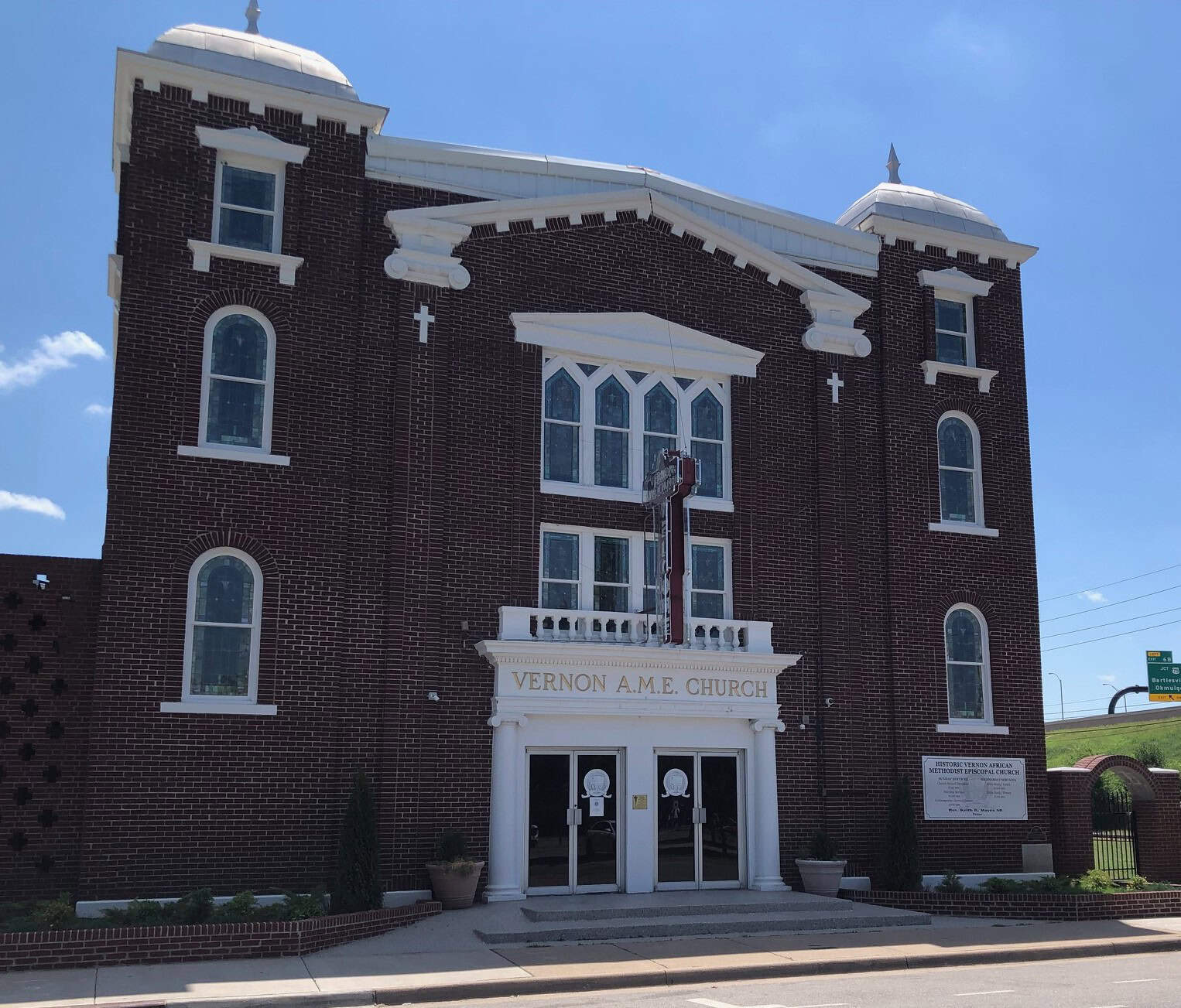
A U.S. congregation at least 3 years old (or a closely affiliated nonprofit) owning a purpose-built house of worship with historic, cultural, or architectural value — National Register listing is not required — that serves non-members. This fund has already backed Tulsa’s Historic Vernon A.M.E. Church (shown in the trust section below) for its restoration and Prayer Wall for Racial Healing.

The 2027 dates come from a secondary grants site’s summary of the live application page — verify on the funder’s site. This is the single best capital fit for an older historic church, if it can raise the match.

Source: National Fund for Sacred Places — Capital Grants

Lane 8 · Largest realistic award

FEMA Nonprofit Security Grant Program (NSGP)

U.S. DHS / FEMA — applied for through your state’s administering agency
Up to $200,000 per site
Up to 3 sites, $600,000 max per organization · FY2026 total: $300 million
FY2026 closed — prepare now for FY2027
What it funds
Physical and cybersecurity target hardening for nonprofits at high risk of attack: access control, cameras, reinforced doors, lighting, bollards, security planning and training. Security only — not general building repair.
Who’s eligible
501(c)(3) nonprofits; houses of worship are expressly named. You must show high risk (vulnerability assessment + Investment Justification), own or lease the facility, and have a UEI.
Status
Closed. FY2026 awards were announced Sep 28, 2026, and no FY2027 notice is published yet. Churches never apply to FEMA directly — they apply as sub-applicants through their own state’s administering agency (in Oklahoma, the Office of Homeland Security), and state deadlines land earlier than the federal one. The six-month job is preparation: SAM.gov/UEI registration and a vulnerability assessment, done before the window opens.

A third-party claim of a state-specific pot and window could not be verified on any official state page — do not rely on it.

Sources: FEMA — Nonprofit Security Grant Program · Oklahoma Office of Homeland Security (example state agency)

Wins Board — awards as clients win them

When a client ministry is awarded a grant, that award posts here — the ministry, the grant, and the award, in the order they come in. Tap any award on this board and you’ll hear the cha-ching. That’s the sound of a house of worship getting funded.

No client awards posted yet — and we won’t pretend otherwise

This board is empty on purpose right now. Our first client ministries are in readiness, matching, and filing — no client has been awarded a grant through David and Goliath yet, so there are no wins to list, no church names to show, and no amounts to claim.

As soon as a client ministry wins, its award will post here. Until then, this board carries honest framing only. The one card below is a demo — it exists just so you can hear the cha-ching today. It is not a client, not a win, and not a real amount.

  1. 1

    A ministry gets awardedThe funder says yes and the award lands in the ministry’s own account.

  2. 2

    The award posts hereIt joins this board, numbered, newest first — ministry, grant, and award as awarded.

  3. 3

    Tap it — cha-chingEvery award card on this board is tappable and plays the cash-register sound when you tap it.

Sound plays only when you tap — browsers block sound that tries to play on its own, so every award here waits for your tap. Real client awards will use this same tap-to-hear design when they post.

A named person, a real business, and the field’s own numbers

No anonymous “our team.” Here is who you’re dealing with, and what the grant field’s own research says about doing this work alone versus with help.

The named human

Josh Thompson

Founder, Country Cousins International LLC — Oklahoma City, OK. David and Goliath Grants is the faith-community grant service of Country Cousins International LLC: we match houses of worship with grants, start to finish, for congregations of every tradition in every state.

Reach a person, not a queue:
Call or text: (405) 486-9104
Email: countrycousinsinternational@gmail.com

When you reach out, a named contact replies within one business day — and that same named contact is who tracks your application to the decision.

Why houses of worship don’t do this alone

10–30%Typical success rate for do-it-yourself grant applications
50–60%Success rate with professional grant help

Figures as published from GrantStation’s State of Grantseeking Report 2024 and Grant Professionals Association data. They describe the field, not a promise about your congregation — your odds depend on fit, readiness, and the funder, which is exactly what the readiness check is for.

Client words go here. Our first congregations are being served now — their words go in this space when they’ve earned the right to be quoted. We won’t print a testimonial we didn’t earn.
Photograph of the Historic Vernon A.M.E. Church in Tulsa's Greenwood District — a red-brick church with white trim, twin domed towers, and its name in gold letters above the entrance

A worked example of a funded historic church

Historic Vernon A.M.E. Church — Greenwood District, Tulsa, Oklahoma. The oldest surviving Black church in Tulsa and the only Black-owned building still standing from the Black Wall Street era. During the 1921 Tulsa Race Massacre, members of the congregation took refuge in the church’s basement; the sanctuary above was destroyed, and the congregation rebuilt it on top of that surviving basement. The basement’s wall is today the Prayer Wall for Racial Healing.

Vernon A.M.E. is proof the money on this page is real: it has received preservation funding through the National Fund for Sacred Places — the same capital-grant lane ranked #7 on the board above — to restore the building and build out that prayer wall. A small, historic congregation, still standing, still serving — and grant-funded to stay that way.

To be plain: Vernon A.M.E. is shown as an example of what grant funding has done for a historic church. It is not a client of David and Goliath Grants, and nothing here implies its endorsement.

Photo: Quintard Taylor Collection, via BlackPast.org · Church history: National Trust for Historic Preservation

Before you apply anywhere: the checklist and the traps

The readiness checklist is the same one we work through with every house of worship — assemble it once, reuse it everywhere. The watch-outs are the pitches and dead ends that waste congregations’ time and money.

The readiness checklist — assemble once, reuse everywhere

  • EINEvery application starts here. Collected at the agreement stage — never on a web form.
  • SAM.gov registration + UEIRequired for any federal money. Free at SAM.gov, renews annually — allow at least 10 business days, often longer. Registered by your congregation, in its own account — we shepherd it, we never hold your login.
  • IRS determination letter — or group-ruling / parent-organization covering letterChurches are automatically tax-exempt under IRC 508(c)(1)(A) and aren’t required to apply for IRS recognition, and many other houses of worship are covered under a parent organization’s group ruling — but most foundation portals demand proof anyway. If your congregation has neither letter, filing Form 1023 / 1023-EZ is the single highest-leverage step before foundation applications.
  • Articles of incorporation, bylaws, Secretary of State good standing
  • Last 2–3 years of financials + current budget + board listAudited or reviewed for larger grants; board-approved statements are fine for small ones.
  • For security grants: vulnerability assessment, Investment Justification, mission statement, lease or deed
  • For preservation grants: ownership deed, historic documentation and photos, contractor bids, match pledges

Source: IRS — Churches & Religious Organizations

Watch out — don’t waste your congregation’s time, or fall for the pitch

  • There is no “free government money for houses of worship.” No grant pays general operating costs or clergy salaries, and no real grant “selects” you unsolicited. Services selling lists of free grants, social posts promising money for commenting “GRANT,” and anyone demanding an upfront processing fee, gift cards, or banking details is running a scam.
  • Real grants never guarantee approval and never charge to apply — and every real one is verifiable on Grants.gov or the funder’s own site. Grant lists are free; anyone selling you one is selling you what Grants.gov gives away.
  • Some big names exclude churches entirely. Sarkeys Foundation’s guidelines, for example, list “religious institutions and their subsidiaries” among needs generally outside support — do not apply there as a church. Source: Sarkeys grant guidelines. Part of readiness is knowing which doors are already closed.
  • Save America’s Treasures ($125,000–$750,000) requires National Register listing at the national level of significance — very few churches qualify.
  • Loans marketed as grants are still loans. Many denominational and commercial church building funds are repayable loan funds, not grants — read the instrument, not the headline.

Questions worth asking — what leaders ask before they call

The honest answers, up front. If your question isn’t here, ask it directly: (405) 486-9104 or countrycousinsinternational@gmail.com.

Do you only work with churches?

No. We work with houses of worship and faith communities of every tradition: Christian churches of all denominations, Jewish synagogues and temples, Muslim mosques and Islamic centers, Hebrew Israelite congregations, Jehovah’s Witness Kingdom Halls, and other temples, meeting houses, and faith-based nonprofits. The process is the same for everyone — readiness, matching, writing, filing, and tracking, in your congregation’s own name, for one flat fee.

One honest difference: a few grant lanes are set by the funder for one tradition only — a denomination’s fund serves its own congregations, and the Kingdom Advancing Grant is Christian-only, for example. Most security, food, community-service, and historic-building lanes are open across faiths. Your readiness check sorts which lanes fit your tradition before any fee is quoted.

Can a house of worship really get grants?

Yes — but hear the honest headline first: there is no general-purpose grant — federal, state, or foundation — that pays a house of worship’s operating costs, clergy salary, or worship. Anyone who tells you different is selling something. The real money is project money, and it’s real:

  • Security — cameras, lighting, doors, hardening for houses of worship.
  • Community service — food, shelter, rent & utility help, health, seniors, youth — served to non-members.
  • Historic buildings — envelope repair (roof, masonry, structure) under preservation standards.
  • Your own tradition’s funds — denominational and association grants to their own congregations, and the lane nobody applies to.

Most funders exclude purely religious activity — worship, religious instruction, proselytizing — from the funded activity, even when a house of worship is an eligible applicant. Tradition-specific private funders are the exception: denominational funds and Brotherhood Mutual, for example, can fund explicitly Christian ministry.

Are we eligible without a 501(c)(3) letter?

Often, yes — and this is where readiness starts. Churches are automatically tax-exempt under IRC 508(c)(1)(A) and aren’t required to apply for IRS recognition. Many congregations — churches, synagogues, mosques, and others — are also covered by a parent organization’s group ruling, and a covering letter proves it. Some lanes accept that; many foundation portals still demand a determination letter, in which case filing Form 1023 / 1023-EZ is the highest-leverage fix. The readiness check sorts out exactly where your congregation stands — own letter, group covering, or neither — before any application is attempted.

Who actually applies — us or you?

Your congregation, always. Funders require the applicant to be the house of worship delivering the service, so every application goes in under your congregation’s own name and EIN, through the funder’s own portal, and any award lands in your congregation’s account. David and Goliath does the work behind it — readiness, matching, writing, filing, tracking — and you approve the application before it goes anywhere and hold the proof of filing after it does.

What does it cost?

One flat fee for the work, quoted in full, in writing, before any work starts — a readiness package or a flat fee per application. No required subscription, no setup fee, no lock-in contract. Never a percentage of the award — funders prohibit paying a writer out of grant money on a percentage, federal cost rules (2 CFR Part 200) restrict it, and your congregation keeps 100% of whatever it’s awarded. And no payment is due until you’ve seen your plate and your fee in writing.

The one optional extra is Grant Watch — $99/month, cancel anytime: ongoing scanning and alerts for new grants your congregation qualifies for. It is never required to hire us, and applications stay flat fee whether you add it or not.

Can you guarantee we’ll win?

No — and run from anyone who does. The funder decides; nobody honest can promise another organization’s decision, and federal HHS/FTC guidance lists “guaranteed funding” language among the warning signs of a grant scam. Here is what we do guarantee, in writing: Filed, or It’s Free — if we take your application fee and don’t file complete and on time, every dollar comes back. The readiness promise — if we finish your readiness package and can’t find grants your ministry qualifies for, that fee comes back. And no-win honesty — if a funder says no, you see the decision letter and we line up the next round.

What do you need from us?

At sign-up, almost nothing: congregation name, city and state, what you’re trying to fund, and how to reach you. After we talk and you decide to move forward, the readiness work needs the documents on the checklist above — determination letter or covering letter, financials and budget, leadership list, program descriptions, and SAM.gov/UEI status for federal lanes. Documents move through a secure link we send after agreement — never through the public form on this page.

What will you never ask for?

The Never List is printed beside the sign-up form, and it holds at every stage: no bank or card logins, no SAM.gov / Grants.gov / Login.gov passwords (your church registers and applies in its own accounts — we shepherd, you hold the keys), no SSNs of pastors, staff, or members, no payment on the inquiry form, and no percentage of any award. If anyone in this field asks you for any of those, you’re looking at a red flag — including if it’s ever us.

The Grant Letter — our free monthly newsletter

Once a month, one email: the grants opening, the deadlines coming, and one readiness move to make before the next cycle. Written for pastors, rabbis, imams, elders, board members — and any member who spots the need first. Free. No payment, nothing sensitive, unsubscribe anytime with one reply. Issue #1 is drafted below — read it right here before you decide.

The Grant Letter · Issue #1 · December 2026

Five dates to circle before January — and the one deadline that lands this month

Welcome to the first issue. Everything below comes off the same ranked grant board on this page, checked against funder sources on November 24, 2026 — and every date gets re-verified before any filing, because cycles move. Funders decide every award; this letter watches the calendar, it doesn’t promise money.

1 · The deadlines, ranked soonest-first

  1. 1Nov 30, 2026

    Walmart Spark Good Local Grants — $250–$5,000. The current cycle’s safe submit date. Houses of worship and faith-based organizations are expressly eligible for community projects like food pantries and clothing closets. Miss it and the next cycle runs Feb 1 – Apr 15, 2027. Funder source

  2. 2Dec 4, 2026

    Episcopal churches: United Thank Offering proposals go to your bishop. One lane, one tradition, one date — if your congregation is Episcopal and has a project in mind, this is the week to move.

  3. 3Jan 4, 2027

    Lilly Clergy Renewal Program portal opens — up to $60,000. A pastor’s renewal leave, planned jointly by pastor and congregation. Proposals are due Mar 17, 2027 — December is when the conversation with your pastor should start, not March. Program source

  4. 4Jan 5, 2027

    Kingdom Advancing Grant opens — $25,000–$50,000. Brotherhood Mutual Foundation money for innovative, church-overseen outreach; Christian churches only, by the funder’s rules, and competitive — 275 applications chased 6 awards in 2026. The program idea has to be shaped in December to be ready in January. Funder source

  5. 5Jan 12, 2027

    National Fund for Sacred Places opens — $50,000–$500,000. Capital grants for historic houses of worship — roof, masonry, structure — due Mar 3, 2027, with a 1:1 match from new funds raised after acceptance. If your building is historic and hurting, December is for gathering the deed, photos, and contractor bids. Program source

2 · Open all month — no deadline to chase

  1. 1

    Food-Bank Partnership + TEFAP — rolling sign-up. Free food inventory for pantries, soup kitchens, and shelters through your regional food bank. Not cash — it offsets a pantry’s largest cost, and a bona fide church can partner even without its own IRS determination letter.

  2. 2

    Your own denomination’s fund — rolling / annual. Typical range $500–$10,000, relationship-based, requires good standing. The lane nobody applies to is often the lane with the best odds — a direct inquiry to your regional body is part of readiness.

  3. 3

    FEMA Nonprofit Security Grant Program — prepare now. Up to $200,000 per site for cameras, access control, and hardening. The FY2026 cycle is closed and no FY2027 notice is out yet — the work that matters now is SAM.gov / UEI registration and a vulnerability assessment, done before the window opens through your state’s administering agency.

3 · Readiness move of the month

Find your determination letter — or your covering letter. Most foundation portals demand proof of tax-exempt status even though churches are automatically exempt under IRC 508(c)(1)(A). If your congregation is covered by a parent organization’s group ruling, get that covering letter into one file this month. If you have neither, filing Form 1023 / 1023-EZ is the single highest-leverage step before January’s openings.

4 · Scam watch

Nobody legitimate guarantees a grant. Federal HHS and FTC guidance lists “guaranteed funding” among the tells of a grant scam — and there is no free government money for general operating costs or clergy salaries. Real grants never charge you to apply, and every real one can be verified on Grants.gov or the funder’s own site. If a pitch asks for gift cards, bank logins, or an upfront processing fee, it’s a trap, not a lane.

5 · What to do this month

  1. 1

    Food ministry? Get the Spark Good application in by Nov 30 — or calendar the Feb 1 cycle opening today.

  2. 2

    Pastor due a renewal? Start the Lilly conversation in December; the portal opens Jan 4 and proposals close Mar 17.

  3. 3

    Historic building? Pull the deed, take the photos, and get one contractor bid before Sacred Places opens Jan 12.

  4. 4

    Not sure you’re ready? That’s what the readiness check is for — start the free sign-up or call (405) 486-9104, and see your plate and flat fee in writing before you pay anything.

That’s Issue #1. Issue #2 lands in January with the Kingdom Advancing and Sacred Places windows open and the first deadlines of the new year ranked. Until then — you put in for it, we do the work behind it.

— Josh Thompson, Founder, Country Cousins International LLC · David and Goliath Grants · Oklahoma City, OK · (405) 486-9104

Sign up — start here

Sign-up is collected on our Google Form, “David and Goliath Grants — Sign-Up” — about two minutes, open to every house of worship and faith community. No payment is taken here, and nothing sensitive is asked — read the Never List beside this section. Rather talk? Call or text (405) 486-9104. Alternate email option: if you prefer email instead of the form, write to countrycousinsinternational@gmail.com — email is an alternate contact, not the form submission.

Call (405) 486-9104 Start — free to look